
Before you board
Cruise Security & Prohibited Items Guide
What actually gets flagged at embarkation, which items cause the most confusion, and how to pack so you do not start your trip with avoidable delays.
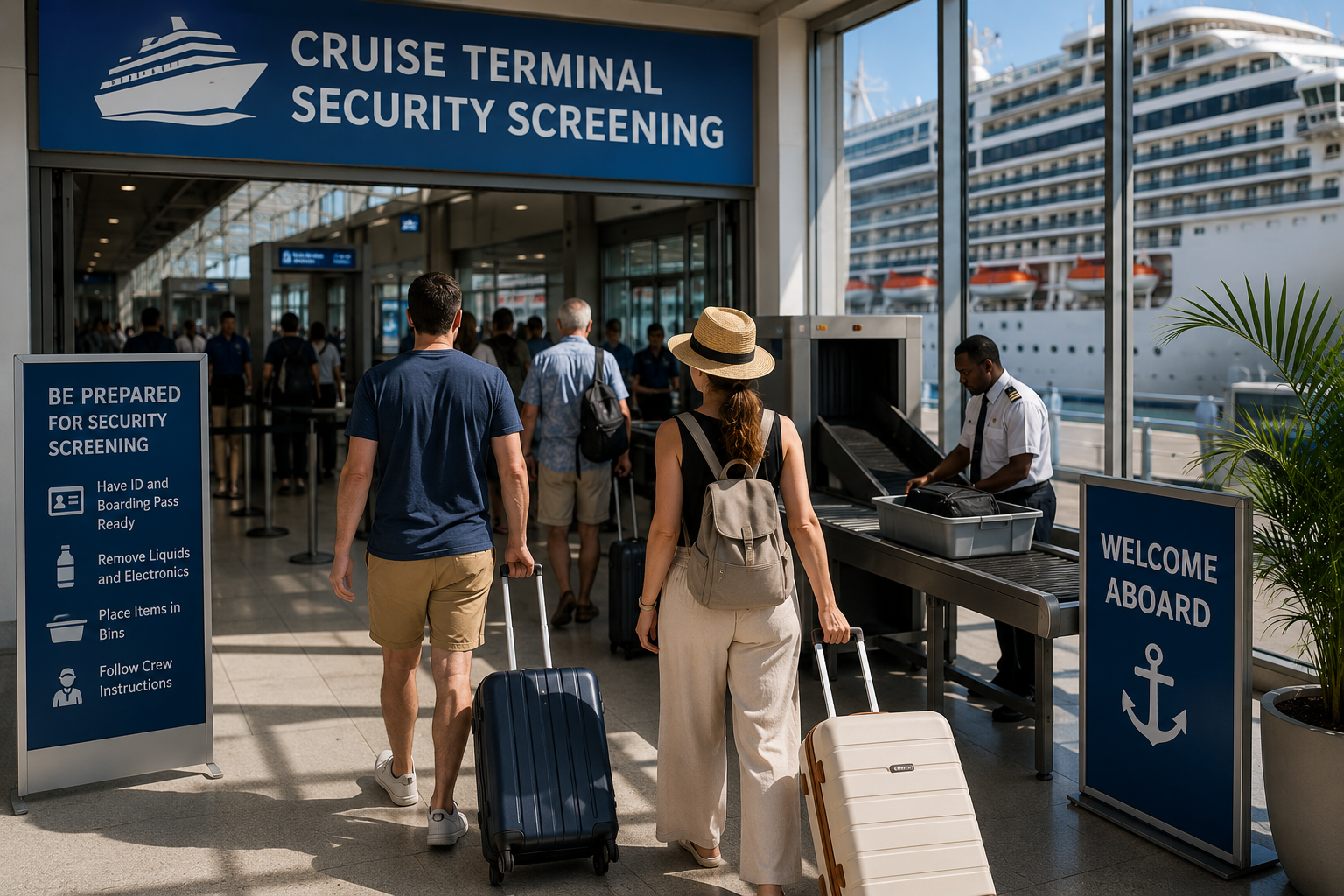
What security screening actually looks like
For most first-time cruisers, security screening feels a lot like going through airport TSA, just not usually as intensive. Before boarding, you will place carry-on bags through an X-ray scanner and walk through a security checkpoint. Cruise staff are primarily looking for prohibited items, dangerous materials, and anything that could create safety issues onboard.
Checked luggage is screened separately after you hand it over at the terminal. Most bags move directly to the ship without any issues, but luggage may be held for inspection if something appears questionable during screening. If that happens, cruise staff will usually contact you and explain the next steps.
The process is generally quick and straightforward. Cruise lines are not trying to make boarding difficult. They simply want to prevent prohibited items from reaching the ship while keeping thousands of guests moving through the terminal efficiently.
Carry-on screening
Carry-on bags are screened before boarding, similar to airport security. Medications, travel documents, electronics, chargers, and other valuable items should remain with you rather than being packed in checked luggage.
Checked luggage screening
Checked bags are screened separately after drop-off. Most passengers never notice this process, but bags containing prohibited items or suspicious electronics may be held for review before being delivered to your cabin.
Why prohibited item rules confuse so many people
A lot of cruise packing mistakes happen because travelers assume cruise lines follow the same rules as hotels, airlines, or destinations they visit. Cruise ships operate under their own policies, which means an item that is legal to own or allowed elsewhere may still be restricted onboard.
Most issues are not caused by passengers trying to break rules. They usually happen because people bring something they use regularly at home and never realize it could create a problem during embarkation.
Common confusion points
- Power strips that include surge protection
- Household extension cords
- Steamers and heating devices
- Bringing alcohol from home
- Cannabis products, even where legal
- Self-defense items that are legal where you live
What usually matters most
- Whether the item creates heat or fire risk
- Whether it affects ship safety
- Whether it violates port or international laws
- Whether cruise line security has restricted it
Extension cords and surge protector rules
This is one of the most common packing misunderstandings. Many travelers assume all power strips and multi-outlet devices are prohibited, but cruise lines are primarily concerned with surge protection features and certain safety circuitry that can create compatibility or fire-risk concerns onboard.
If you need extra outlets, check your cruise line’s policy before departure. Simple multi-outlet adapters and non-surge USB charging devices are often permitted, while surge-protected devices may be restricted. When in doubt, verify the rules in advance rather than risk having an item held until the end of the cruise.
Usually restricted
- Standard household extension cords
- Power strips with surge protection
- Multi-outlet devices with unclear labeling
Often safer options
- Cruise-approved outlet adapters
- Non-surge USB charging hubs
- Simple cabin organization for fewer devices

Pack for the ship, not just the trip
Cruise packing rules are less about inconvenience and more about fire safety, screening efficiency, and avoiding items that create problems once everyone is onboard.
Cruise packing is different from packing for a hotel or resort vacation. In addition to planning for your destination, you also need to consider embarkation day, onboard activities, weather changes, security policies, and items that may be restricted by the cruise line.
Many prohibited-item issues happen because travelers focus on where they are going instead of how the cruise itself operates. A few minutes of planning before departure can help you avoid delays, held items, and unnecessary stress at the terminal.
Alcohol rules are more limited than many people expect
Alcohol policies vary by cruise line, but they are rarely as flexible as many first-time cruisers expect. Some lines allow a limited amount of wine at embarkation, some charge corkage fees if you bring that wine into dining venues, and most restrict liquor brought from home almost entirely. Duty-free purchases made during the cruise may also be held until the end of the sailing.
Many travelers assume a bottle packed in checked luggage will quietly arrive in their cabin. Cruise lines know this is one of the most common attempts to bypass onboard alcohol policies, and luggage screening often catches it.
If your goal is reducing onboard drink costs, the better approach is understanding your cruise line’s alcohol policies and comparing them to available drink package options.
Cannabis misconceptions cause real embarkation problems
Cannabis may be legal where you live, but that does not mean it is permitted on a cruise ship. Cruise lines generally prohibit marijuana products, THC-infused items, and cannabis-derived products regardless of local laws at the departure port or destination.
This misunderstanding creates real embarkation problems every year. Travelers sometimes assume that medical authorization, state legalization, or personal-use laws override cruise line policies. In most cases, they do not.
The safest approach is to review your cruise line’s prohibited items policy before departure and leave cannabis products at home. What is legal on land may still create complications when traveling through cruise terminals, ports, and international destinations.
Heat-producing items
Steamers, clothing irons, hot plates, heating coils, and similar items are commonly restricted because they create fire risks in cabin environments. Even items that seem harmless at home may not be permitted onboard if they generate significant heat.
If you are unsure about a specific appliance or personal device, check your cruise line’s prohibited items list before packing. A quick review can prevent delays or confiscated items during embarkation.
Weapons and self-defense items
Firearms, ammunition, knives, pepper spray, stun devices, and other self-defense items are generally prohibited by cruise lines. Even when these items are legal to own or carry where you live, cruise line policies and international travel requirements often make them unsuitable for cruise travel.
If you normally carry a self-defense item, review the cruise line’s policies before departure rather than assuming it will be permitted onboard. Security screening may result in restricted items being confiscated or denied entry.
Practical packing compliance advice
A few simple habits can prevent most security and prohibited-item issues before you ever arrive at the cruise terminal:
- Review your cruise line’s prohibited items list a few days before departure, not just when you first book.
- Keep medications, travel documents, electronics, chargers, and valuables in your carry-on.
- Do not pack questionable electronics unless you have confirmed they are allowed.
- Use simple charging adapters and USB hubs rather than devices with unclear labeling or surge protection features.
- Leave prohibited self-defense items at home if your cruise line restricts them.
- Assume that luggage screening is routine and pack accordingly.
Most security delays are not caused by passengers intentionally breaking rules. They happen because travelers make reasonable assumptions that do not match cruise line policies. A few minutes of preparation can help ensure a smoother embarkation day and a less stressful start to your vacation.
Frequently asked questions
These are some of the most common security and packing questions first-time cruisers run into before embarkation day.
Do cruise lines scan checked luggage?
Yes. Checked bags are typically screened before delivery, and flagged items can delay your luggage or require you to visit security to resolve the issue.
Can you bring an extension cord on a cruise?
Usually no. Many cruise lines prohibit standard extension cords because of fire risk. Cruise-approved non-surge USB hubs or adapters are often the safer option, but always verify your line’s current policy.
Are surge protectors allowed?
Often no. Even if a power strip looks small, surge-protection features are commonly prohibited. Read the wording carefully before packing electronics.
Can I bring a power strip if it doesn’t have surge protection?
Many cruise lines allow certain non-surge power strips or charging hubs, but policies vary. The important distinction is that devices with surge-protection features are often restricted. Always verify your cruise line’s current policy before packing any multi-outlet device.
Can you bring alcohol onboard?
Sometimes in limited amounts, but rules vary by cruise line and embarkation port. Wine allowances, corkage fees, and restrictions on spirits are common.
Is cannabis allowed if it is legal where I live?
No. Cruise policies and port rules are stricter than many travelers expect. Legal status at home does not make cannabis acceptable for embarkation or international travel.
Will cruise security take my prohibited items away?
It depends on the item and the cruise line’s policy. Some restricted items may be held and returned at the end of the cruise, while others may need to be discarded before boarding. The safest approach is to review prohibited-item policies before departure rather than assuming an item will be allowed onboard.
What happens if you pack a prohibited item?
It may be confiscated, held until the end of the sailing, or require an in-person review. The exact outcome depends on the item and the cruise line’s policy.
Pack for fewer surprises
Most cruise security issues are preventable with a little preparation. Understanding prohibited items, packing appropriately, and reviewing your cruise line’s policies before departure can help you avoid delays and start your vacation with less stress.