
Cruise Drink Packages
Cruise drink packages can simplify budgeting, but they are not always the best value for every traveler, and different cruise lines handle packages differently.
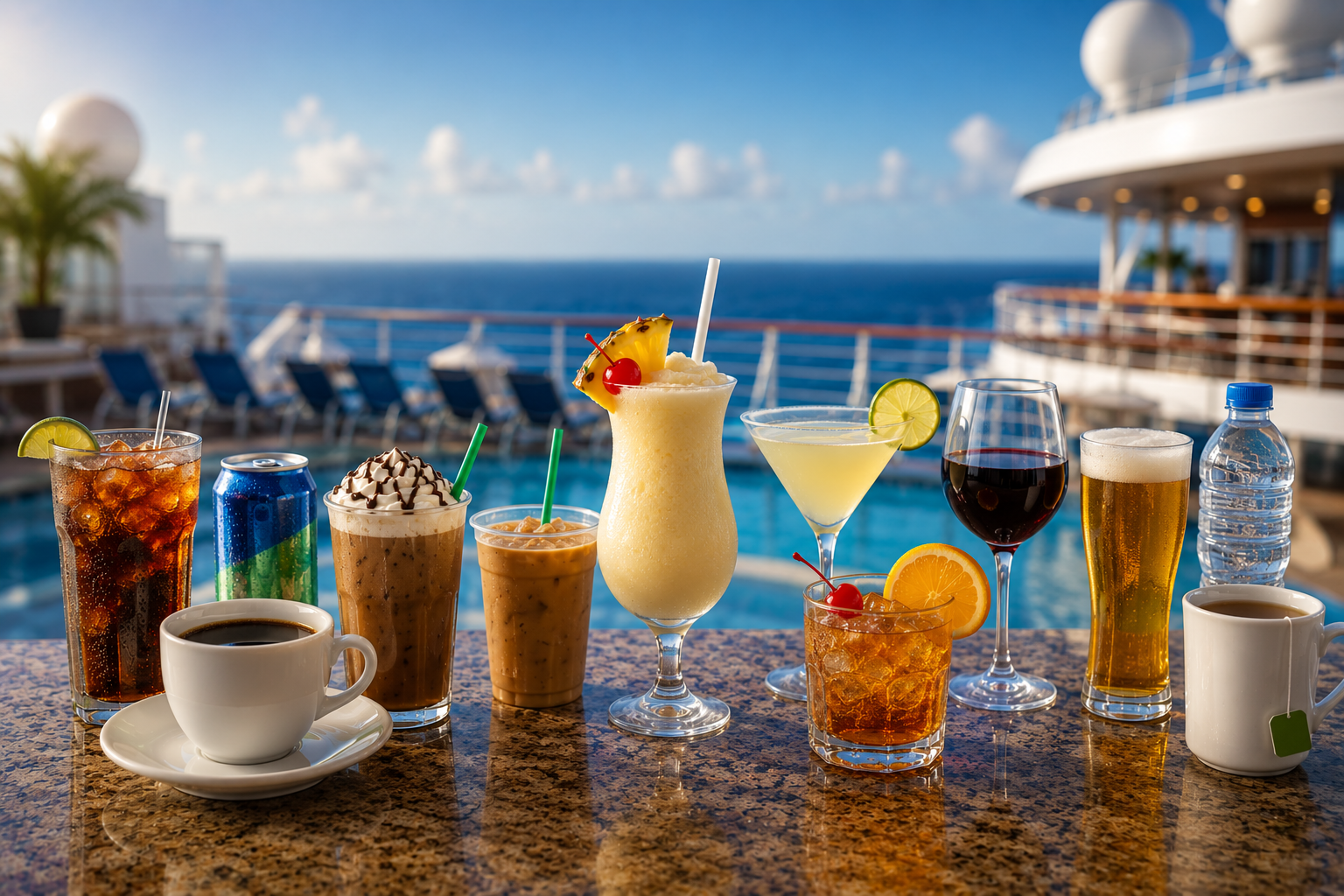
For many cruisers, drink packages can feel more confusing than expected. The advertised daily price is only part of the equation. Gratuities, cruise line rules, itinerary length, and how much time you actually spend onboard can all change whether a package feels convenient or overpriced.
For some travelers, drink packages simplify the trip and make onboard budgeting easier. For others, they become one of the easiest ways to overspend without realizing it until the cruise is over. The right choice usually depends less on the cruise line itself and more on your personal habits, itinerary, and travel style.
If you are still comparing your overall onboard budget, this guide pairs well with the Costs Guide.
What Cruise Drink Packages Usually Include
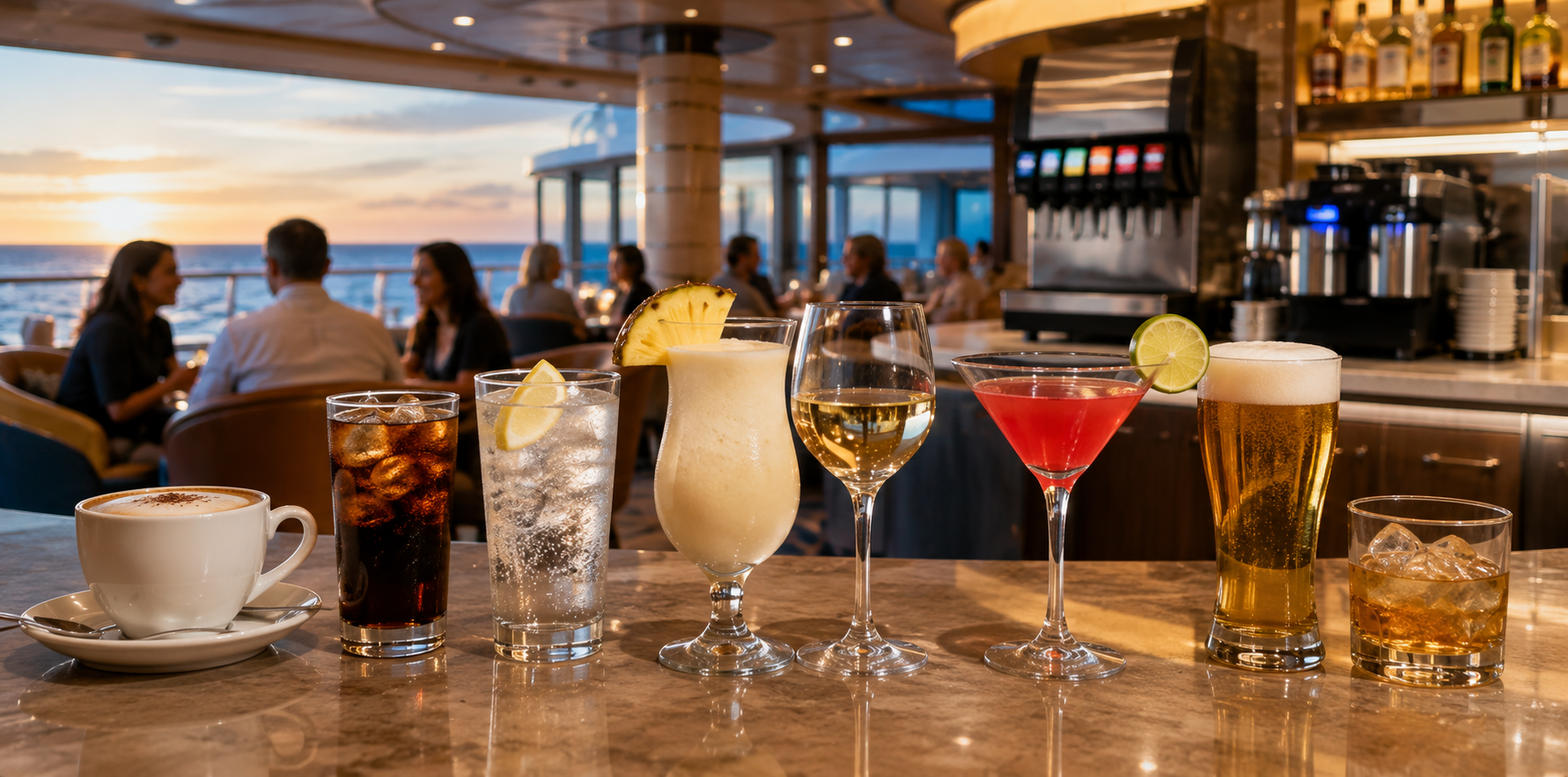
Most mainstream cruise drink packages include some combination of soda, cocktails, beer, wine by the glass, bottled water, and specialty coffee drinks. Depending on the cruise line and package tier, some plans may also include smoothies, mocktails, fresh juices, milkshakes, or energy drinks.
One detail that catches many cruisers off guard is that cruise lines often separate beverages into multiple package categories. A soda package may not include specialty coffee or energy drinks, while some alcohol packages still exclude premium coffee drinks, bottled water brands, fresh juices, or beverages sold in specialty venues.
Packages are also rarely “unlimited” in the broadest possible sense. Premium liquor tiers may cost extra, Starbucks-branded drinks are excluded on some ships, and minibar items or room service beverages may fall outside standard package rules.
It also helps to remember that not every drink onboard costs extra. Standard drip coffee, basic tea, lemonade, breakfast juice, fruit punch, and some dining room beverages are often already included in the cruise fare.
Many experienced cruisers pre-purchase bottled water before embarkation so it is waiting in the cabin when they board. That can be especially helpful because most cruise lines discourage guests from directly refilling reusable bottles at public beverage stations.
Some travelers also bring drink flavor packets for reusable bottles. Since lemonade, tea, fruit punch, and other basic beverages are usually available around the ship at no extra cost, flavor packets can make it easier to stay hydrated without constantly purchasing bottled drinks or soda packages.
How Cruise Drink Packages Actually Work
Most cruise lines price drink packages per person, per day. That means the total cost can add up quickly on a weeklong sailing, especially once automatic gratuities are added. The advertised daily rate is often lower than the final amount you actually pay.
Packages also do not all work the same way. Some activate immediately after boarding, while others begin later on embarkation day depending on the cruise line and itinerary. Certain cruise lines place daily drink limits on specific packages, while others focus more heavily on time spacing between orders and anti-sharing rules.
Age restrictions matter as well. Alcohol packages are only available to guests who meet the cruise line’s drinking age requirements, and some cruise lines require that if one adult in a cabin purchases an alcohol package, the other adult must purchase one too. That single policy can significantly change the math for couples and families.
Norwegian is a good example of why details matter. Norwegian frequently bundles beverage packages through its Free at Sea promotions, which can make the offer appear more all-inclusive than it first sounds. Guests still usually pay gratuities on the beverage package value, so the package is not completely “free” in the everyday sense.
Cruise lines also handle drink access differently onboard. Some Royal Caribbean ships use freestyle soda machines and self-serve beverage stations that make it easy to refill drinks throughout the day. On Norwegian, many beverages are usually ordered directly through bars, lounges, or dining venues instead. Neither approach is necessarily better, but the convenience difference can affect how useful a package feels during the cruise.
Coffee is another area where package confusion happens frequently. Basic drip coffee is included for all guests on Norwegian and many other cruise lines. Specialty coffee drinks, however, are often excluded unless a separate coffee package or qualifying beverage package applies. That distinction matters if your daily routine includes lattes, cappuccinos, cold brew, or branded coffee drinks.
The most important thing is to check the details for your specific sailing before you buy. Promotions, ship differences, itinerary rules, and beverage exclusions can all change what is actually included once you step onboard.
When Drink Packages Are Worth It
Drink packages tend to make more sense on sea-day-heavy itineraries, when you are spending long stretches onboard and actually have time to use them.
- Travelers who enjoy cocktails, beer, or wine throughout the day
- Guests who buy specialty coffee most mornings
- Social cruisers who spend a lot of time at bars, lounges, and pool decks
- Travelers who prefer predictable budgeting before the trip begins
When Drink Packages Are NOT Worth It
They are often a poor fit for port-heavy itineraries, light drinkers, and travelers who spend most of the day off the ship on excursions.
- Travelers who are already happy with the included coffee, tea, water, and breakfast drinks
- Travelers who rarely drink alcohol or soda
- Cruisers focused more on sightseeing than onboard bar time
- Anyone who dislikes feeling pressure to drink enough to justify the cost
Many people have a great cruise without buying an expensive drink package. That is completely normal, and for plenty of travelers it is the smarter financial choice.
If you are only planning to have a couple of alcoholic drinks per day, paying individually is often cheaper than purchasing a full beverage package. That is especially true on port-heavy itineraries where you may spend much of the day off the ship.
Cruise Line Differences You Should Know
Drink package rules are not standardized across the industry, which is one reason comparing cruise lines early can save frustration later.
Norwegian Cruise Line often bundles more promotional perks than some competitors, which is one reason its beverage offers can initially feel especially appealing. Norwegian’s entertainment variety is also considered a major strength by many travelers, so guests who spend more time onboard sometimes place greater value on beverage packages as part of the overall cruise experience.
Royal Caribbean approaches onboard spending a little differently on many ships. On many Royal Caribbean ships, beverage packages are just one part of a larger mix of specialty dining, activities, and optional onboard upgrades. Some travelers enjoy the flexibility and variety, while others prefer a simpler bundled approach.
Cruise lines also differ in how convenient drink access feels throughout the ship. Some Royal Caribbean ships use freestyle soda machines and self-serve beverage stations that make quick refills easy during the day. On Norwegian, many drinks are usually ordered directly through bars, lounges, or dining venues instead. Neither system is necessarily better, but the experience can feel very different depending on your habits and travel style.
Carnival Cruise Line tends to appeal to travelers looking for a lively mainstream atmosphere, though beverage package value still depends more on personal habits than brand reputation alone. MSC Cruises can offer aggressive pricing value upfront, but travelers should still pay attention to what costs may be added later through specialty dining, drinks, or onboard extras.
Disney Cruise Line handles alcohol differently than many mainstream cruise lines and is often approached by families with very different beverage habits. For some travelers, that changes whether a package-style mindset even makes sense for the trip in the first place.
If you are still comparing cruise lines more broadly, the Cruise Lines guide and First Cruise Tips page can help put drink package decisions into a bigger beginner-friendly context.
Hidden Costs and Rules Most People Miss
This is where experienced cruisers usually save money. They know the package headline is only part of the story.
- Automatic gratuities: Beverage package gratuities are usually added automatically to your onboard account unless they are prepaid in advance. Many first-time cruisers are surprised by how quickly these charges add up by the end of the trip if they were only focusing on the advertised package price.
- Bottled water confusion: Bottled water is often not fully included, even with some beverage packages. Many experienced cruisers pre-purchase bottled water before the cruise so it is waiting in the cabin at embarkation, which is usually cheaper and more convenient than buying individual bottles onboard.
- Specialty coffee exclusions: Basic drip coffee is usually included in the cruise fare, but espresso drinks, lattes, cappuccinos, cold brew, and branded coffee drinks are often excluded unless you purchase a separate coffee package or qualifying beverage plan.
- Private island rules: Beverage packages do not always work the same way off the ship, even at cruise line private destinations. Some lines include more than others, and certain beverage options may still cost extra.
- Timing restrictions: Most drink packages begin working on embarkation day after departure, but pricing is usually cheaper when packages are purchased before the cruise instead of waiting until you are already onboard.
- Sharing restrictions: Cruise lines monitor beverage package sharing closely. Ordering multiple alcoholic drinks at once or repeatedly attempting to share drinks with another guest can trigger warnings or package restrictions.
- Cancellation deadlines: Some cruise lines allow cancellations or package changes before sailing, but policies often become more restrictive once the cruise begins.
- Taxes while in port: Depending on the itinerary, local taxes can still apply to drinks purchased while the ship is docked in certain ports.
These details may sound small, but they are exactly the kind of fine print that changes whether a package feels convenient or frustrating. It is worth checking them before final payment, along with practical planning details in the Embarkation Guide and Cruise Packing Guide.
Final Thoughts
You do not need a drink package to enjoy a cruise. For some travelers, beverage packages make budgeting easier and simplify the onboard experience. For others, paying individually is the more flexible and less expensive option.
The best choice usually depends on your travel style, itinerary, onboard habits, and how much time you realistically expect to spend enjoying the ship versus exploring ports. Travelers who spend most of the day off the ship may use a package far less than they originally expected, while sea-day-heavy cruises can make beverage packages feel more valuable.
It is also worth remembering that cruise line policies, package inclusions, gratuities, and beverage access can vary more than many first-time cruisers realize. Taking a few minutes to compare the details before sailing can help avoid unnecessary onboard spending later.
If you want to keep planning the practical side of your first cruise, continue with Travel Hacks, revisit the Costs Guide, or go back to Cruise Lines to compare how the overall onboard experience can differ from one brand to another.
Keep planning with confidence
Drink packages are only one part of the onboard budget. Compare your habits, check the rules early, and use the rest of your planning to avoid surprise costs before embarkation.