
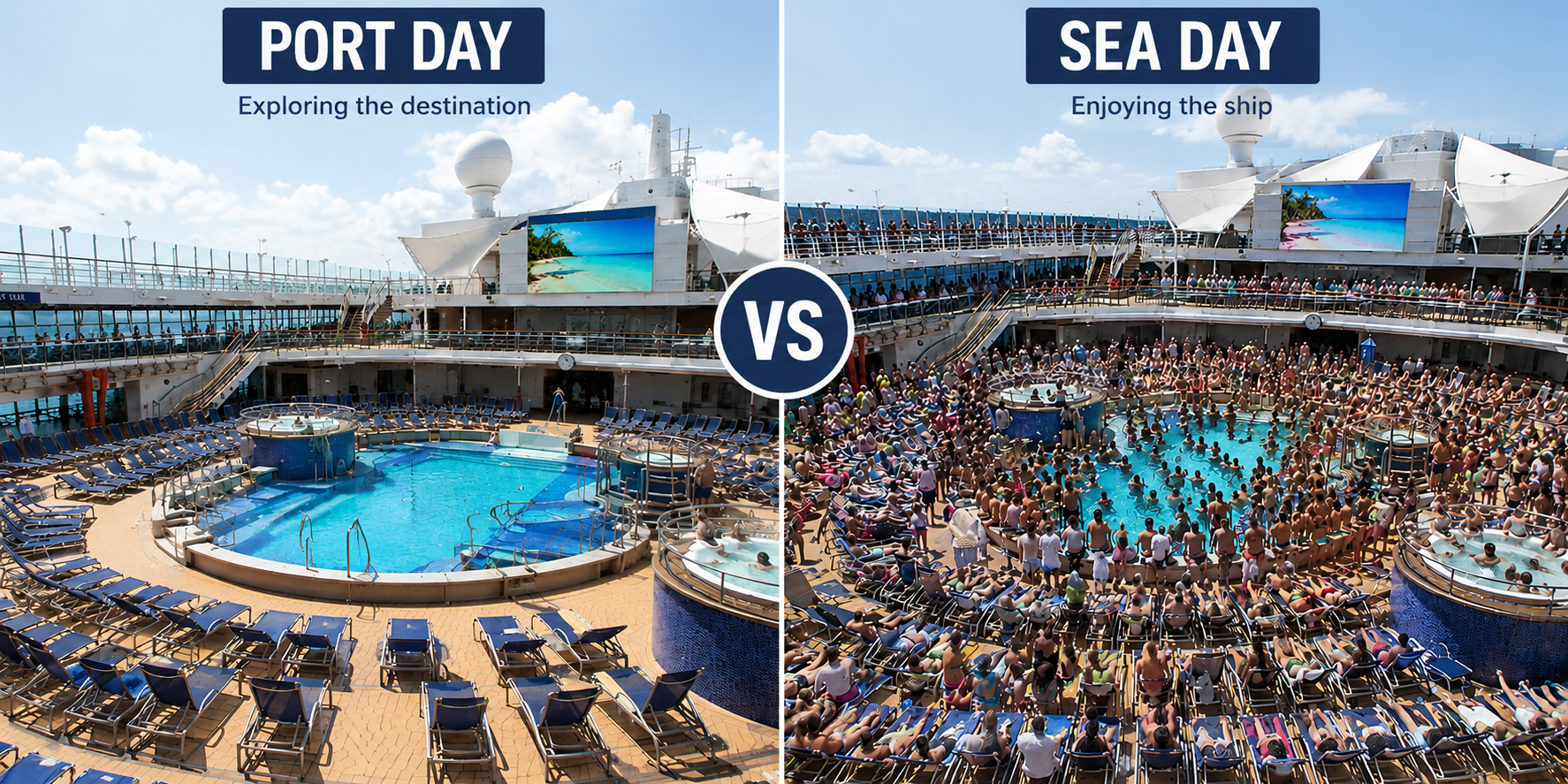
How different cruise itineraries actually feel once you are onboard.
One of the easiest ways to misjudge a cruise is to focus only on the destinations without thinking about how the itinerary will actually feel once you are onboard. Two cruises can look very similar on paper but feel completely different depending on how many sea days and port days are built into the schedule.
Some travelers book a cruise mainly for the ship itself. Others care much more about the ports. Most cruisers end up enjoying the trip more when they understand that balance ahead of time.
This guide breaks down what sea-day-heavy and port-heavy cruises are really like, how they affect crowds and spending, and which style often works better on a first cruise.
What Is a Sea Day?
A sea day is a day when the ship is not stopping in port. You stay onboard while the ship sails to the next destination.
That usually means more time for pools, shows, bars, trivia, specialty dining, spa visits, and simply exploring the ship. Sea days often feel more ship-focused and relaxing, but they can also become noticeably busier because nearly everyone is onboard using the same spaces at the same time
What Is a Port Day?
A port day is a day when the ship docks or anchors at a destination and passengers can go ashore.
Port days usually start earlier and involve more planning, transportation, walking, and scheduling around excursion or all-aboard times. Port-heavy cruises can feel exciting, but they can also become surprisingly tiring after several busy days in a row
Sea-Day-Heavy vs Port-Heavy Cruises
Sea-day-heavy cruises
- Relaxation: Usually more relaxing and less rushed
- Pacing: Slower, with more time to settle into the ship
- Onboard crowds: Heavier at pools, elevators, bars, and activities
- Budgeting: Often more onboard spending
- Exhaustion level: Usually easier physically than back-to-back ports
- Entertainment usage: Higher because you actually have time to use the ship
- Drink package value: Often stronger because you are onboard longer
Port-heavy cruises
- Relaxation: Often less relaxing unless you skip some ports
- Pacing: Faster, with earlier mornings and more logistics
- Onboard crowds: Lighter during the day while many passengers are ashore
- Quieter ship time: Some cruisers intentionally stay onboard during certain ports to enjoy shorter lines, emptier pools, and a more relaxed ship atmosphere.
- Budgeting: More money often shifts to excursions, transport, food, and shopping
- Exhaustion level: Can become tiring, especially for families or older travelers
- Entertainment usage: Lower because you spend less time onboard
- Drink package value: Often weaker if you are off the ship most of the day
Itinerary style changes more than just your schedule. It also affects crowds, onboard spending, drink package value, and how much time you actually spend enjoying the ship itself.
Why Sea Days Feel Different Onboard
Sea days change the mood of the ship because everyone is using the same spaces at the same time. That is when you notice which ships handle crowds well and which ones feel tight once the pool deck fills up.
- Pools and loungers: These fill early on popular ships.
- Elevators: They often feel slower and more crowded than on port mornings.
- Activities: Trivia, game shows, and family activities usually get busier.
- Bars and lounges: Demand rises because more passengers stay onboard all day.
- Wi‑Fi: Usage and congestion often increase on sea days, especially later in the afternoon and evening when more passengers are online at once.
- Specialty dining: Reservations can feel more competitive on sea days than on port nights.
Ship design matters more on sea days than many first-time cruisers expect. Larger ships with more pool space, indoor venues, and entertainment options usually spread crowds out better. Smaller or older ships can still be enjoyable, but busy sea days may feel noticeably more crowded.
Which Style Is Better for a Cruise?
For many cruisers, having at least one sea day makes the trip feel less rushed and easier to settle into. It gives you time to learn the ship, settle into your cabin routine, and enjoy the parts of cruising that are easy to miss when every morning starts with a port plan.
This is one reason very short 3-day cruises can feel more hectic than people expect. They often move fast, can feel more party-focused, and may not give you enough time to understand whether you actually like the ship experience itself. Slightly longer cruises usually feel easier because you have more time to settle in.
That said, some travelers choose cruises mainly for the destinations. If you care most about seeing multiple ports, a port-heavy itinerary may still be the better fit. Other travelers care more about the ship, the onboard atmosphere, and slow days at sea. For them, sea-day-heavy itineraries often feel better.
Families often benefit from at least one sea day because it creates breathing room. Kids can use the ship more fully, adults can slow down, and the trip feels less like a race. If you are still deciding what kind of ship experience you want, First Cruise Tips can help you match itinerary style with the right cruise experience.
One final practical point: you do not have to get off in every port. Some cruisers intentionally stay onboard during certain port days to enjoy a quieter ship, shorter lines, and a slower day onboard.
FAQ
Are sea days boring?
Do drink packages make more sense on sea days?
Not usually. On the right ship, sea days can be some of the most enjoyable parts of the trip because you finally have time to use the pools, shows, lounges, and quiet deck spaces.
Do drink packages make more sense on sea days?
Not usually. Whether a drink package is worth the cost depends more on your drinking habits than whether you are in port or at sea. However, sea days often provide more opportunities to use a package because you are spending more time onboard.
On the right ship, sea days can be some of the most enjoyable parts of the trip because you finally have time to explore the ship at your own pace, enjoy the pools, attend shows, relax in lounges, and discover quiet deck spaces you may have missed earlier in the cruise.
Is a 3-day cruise too short for a cruise?
It can be. Very short cruises often feel rushed and more hectic than many travelers expect. Between embarkation, safety drills, port stops, and debarkation, the trip can feel over quickly before you fully settle into the ship experience.
Many cruisers find that three-day itineraries leave very little time to truly relax and enjoy the ship. It is common to hear people say they returned home feeling like they need a vacation after their vacation.
Do I have to get off the ship in every port?
No. Many cruisers intentionally stay onboard during certain port days to enjoy a quieter pool deck, shorter lines, easier reservations, and a more relaxing day on the ship.
Are sea days more crowded?
Usually, yes. Pools, elevators, bars, activities, Wi-Fi, and specialty dining all tend to feel busier when everyone is onboard at the same time.
Planning your first itinerary?
The balance between sea days and port days can completely change how a cruise feels. Some travelers want nonstop destinations, while others enjoy slower sea days and more time onboard. Choosing the right itinerary often matters just as much as choosing the right ship.