
Dining Guide
Cruise Dining Guide
A practical guide to what cruise dining actually feels like onboard, from buffet crowds and long main dining room dinners to specialty restaurant upsells and sea-day food congestion.
Cruise dining is usually easier than people expect, but it is also less straightforward. Some food is included, some costs extra, some venues require reservations, and the busiest meal times can feel surprisingly crowded.
Dining quality and convenience also vary heavily by cruise line, ship size, and itinerary. A sea-day-heavy cruise can make specialty dining and drink packages feel more useful, while a port-heavy sailing may leave you spending far less time onboard than expected.
Most people do not need to pay extra for specialty dining every night. In many cases, the main dining room and buffet provide more than enough variety, especially if you understand when crowds peak and how dining flow changes throughout the cruise.
This guide keeps it practical: what is included, what gets crowded, what costs extra, what takes longer than expected, and what cruise dining actually feels like once you are onboard.
Included vs specialty dining
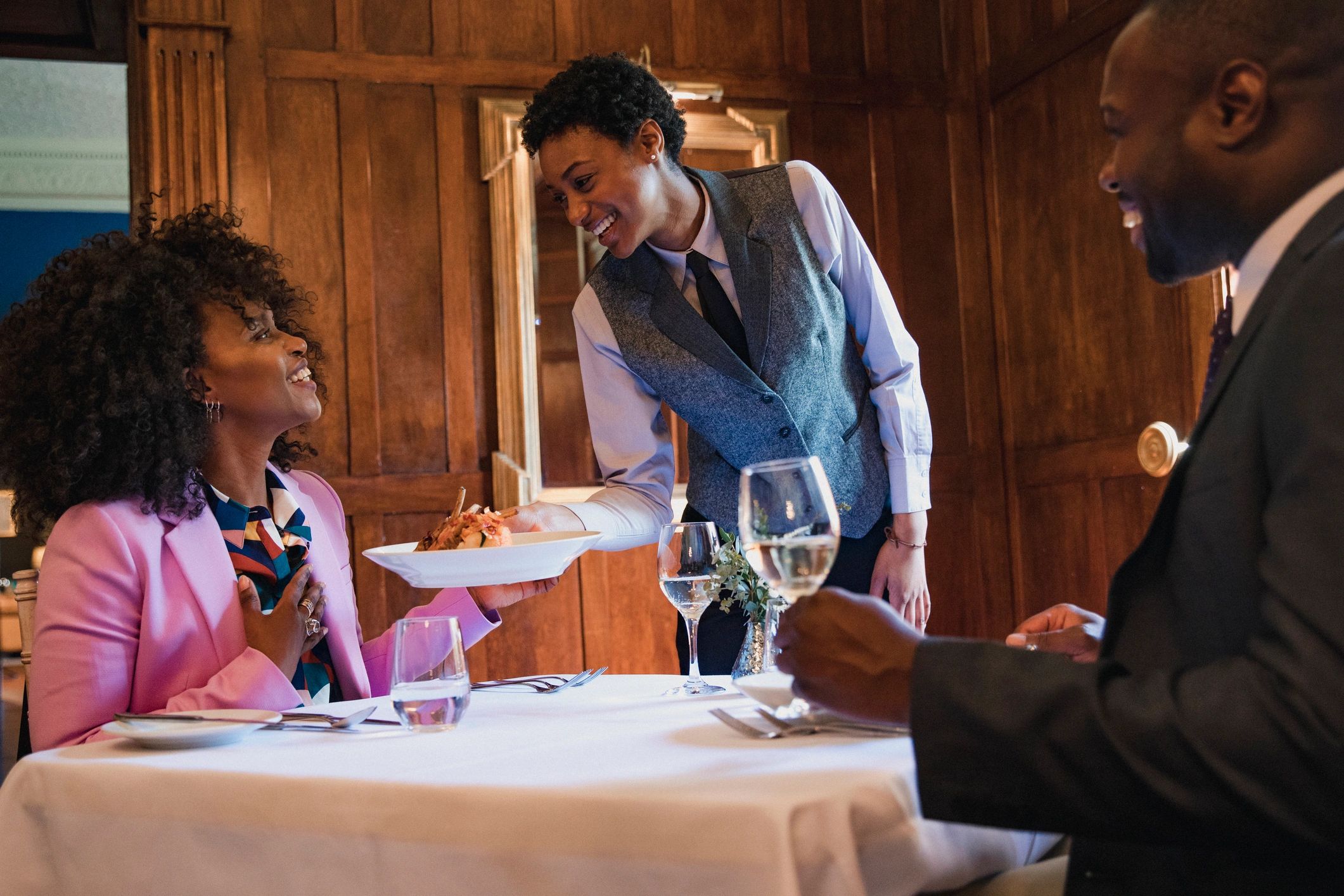
Most cruises include the buffet, main dining room, and a few casual food venues in your fare. Specialty restaurants cost extra and usually offer a quieter atmosphere, slower service pace, and more focused menus such as steakhouses, hibachi, or Italian dining.
Many beginners assume specialty dining is required to get good food onboard, but that is usually not the case. In many situations, the complimentary dining options provide more than enough variety, especially for families or budget-focused travelers.
- Included dining: easier on the budget, but often busier during peak meal times
- Family advantage: buffets and casual venues usually offer more variety for younger or picky eaters
- Specialty dining: better for celebrations, quieter meals, or a slower dining experience
- Cost reality: specialty dining and dining packages can add up quickly for couples and families
- Package reality: dining packages are usually more useful on sea-day-heavy itineraries than port-heavy sailings
Main dining room expectations
The main dining room is usually where beginners realize cruise meals are not designed to be fast. Dinner can easily take 90 minutes or more on busy nights, especially during peak dining times.
For some cruisers, that slower pace becomes part of the vacation. Others quickly realize they would rather grab something faster and spend more time exploring the ship or making evening shows.
- Good for a quieter sit-down dinner experience
- Better if you enjoy slower multi-course meals
- Flexible dining can still involve long waits during busy hours
- Less ideal if you prefer quick meals or tight evening schedules
Buffet reality on cruise ships
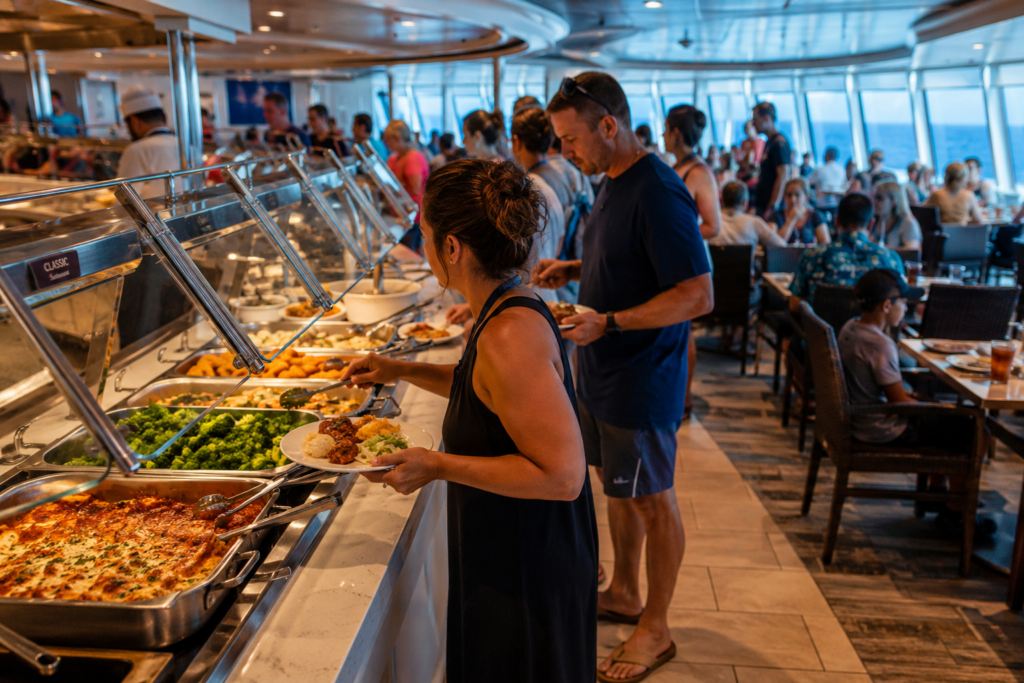
The buffet is convenient, flexible, and usually one of the easiest dining options for beginners. It is also where cruise dining often feels the most crowded and chaotic, especially during peak meal times.
Embarkation lunch can be overwhelming, sea-day breakfasts fill up quickly, and finding an open table during busy hours sometimes becomes harder than finding the food itself.
Experienced cruisers often adjust their dining schedule to avoid the biggest crowds by eating earlier, later, or during port days when more passengers are off the ship.
- Embarkation day: usually the busiest buffet experience of the trip
- Sea days: more congestion, longer lines, and fewer open tables
- Port days: often calmer if many passengers are ashore
- Breakfast rush: one of the busiest buffet periods on most ships
- Buffet advantage: fast variety and flexibility without reservations
Reservations, packages, and common confusion
A lot of beginner dining stress comes from not knowing what needs to be booked ahead. Some ships make reservations feel optional, while others push specialty dining packages and prime-time bookings early.
- Specialty dining packages usually make more sense on sea-heavy itineraries
- Port-heavy cruises reduce the value if you are off the ship for long stretches
- Popular dinner times can fill quickly on larger ships
- Extra-charge dining is not always dramatically better than included options
Dress code reality
Most cruise dining dress codes are more relaxed than beginners expect. In practice, many nights feel closer to neat casual than formal, though swimwear, tank tops, or flip-flops may still be restricted in some dining rooms.
Breakfast, lunch, and late-night food
Food availability changes more than beginners expect throughout the day. Breakfast and lunch are usually easy, but late-night options can narrow quickly depending on the ship.
- Breakfast is often easiest in the buffet or casual spots
- Lunch can be better on port days when the ship is quieter
- Late-night food may be limited to pizza, snacks, or one casual venue
How dining differs by cruise line
Dining convenience is one of the clearest ways cruise lines feel different. Royal Caribbean often has fewer complimentary food venues spread throughout the ship than Norwegian, while Norwegian tends to offer more casual grab-and-go or flexible included options. That does not automatically make one better, but it changes how easy it feels to grab food without planning around the buffet or main dining room.
Ship size matters too. Larger ships may offer more venues overall, but they also create more competition for prime dining times and more crowd pressure on sea days.
Realistic food expectations
Cruise food quality is subjective, and expectations matter. Most meals are not luxury-restaurant level, but they are usually better than the harshest online complaints suggest. For many travelers, cruise food lands somewhere between banquet food and a solid chain restaurant, with a few standout meals mixed in.
- Some dishes will be very good
- Some will be forgettable
- The convenience matters almost as much as the food itself
Final thoughts
For cruisers, cruise dining usually works best when you treat it as part convenience, part routine, and part trial and error. You do not need to book every extra restaurant, but it helps to know which meals will be crowded, which ones take time, and which ships make casual dining easier than others.
If you want help comparing ships, itineraries, and dining setups before you book, Blue Ridge Journeys can help you narrow down the options.
Cruise Dining FAQ
Short answers to the questions beginners usually ask first.
Is cruise food included?
A lot of it is. Your fare usually covers the buffet, main dining room, and a few casual spots, but specialty restaurants cost extra.
Is specialty dining worth it?
Usually more on sea-day-heavy cruises or longer sailings. On port-heavy trips, you may not use it enough to justify the cost.
How long does dinner take in the main dining room?
Often 90 minutes or more, especially on busy nights. It feels more like a full sit-down dinner than a quick meal.
Are cruise buffets crowded?
Yes, especially on embarkation day, sea days, and right after popular port return times.
Do I need to dress up for dinner?
Usually not as much as people expect. Most nights are closer to neat casual than formal, though some venues still have dress guidelines.
Is cruise food amazing?
Sometimes, but not always. Most cruise food lands somewhere between banquet food and a solid chain restaurant, and opinions vary a lot by ship and cruise line.