
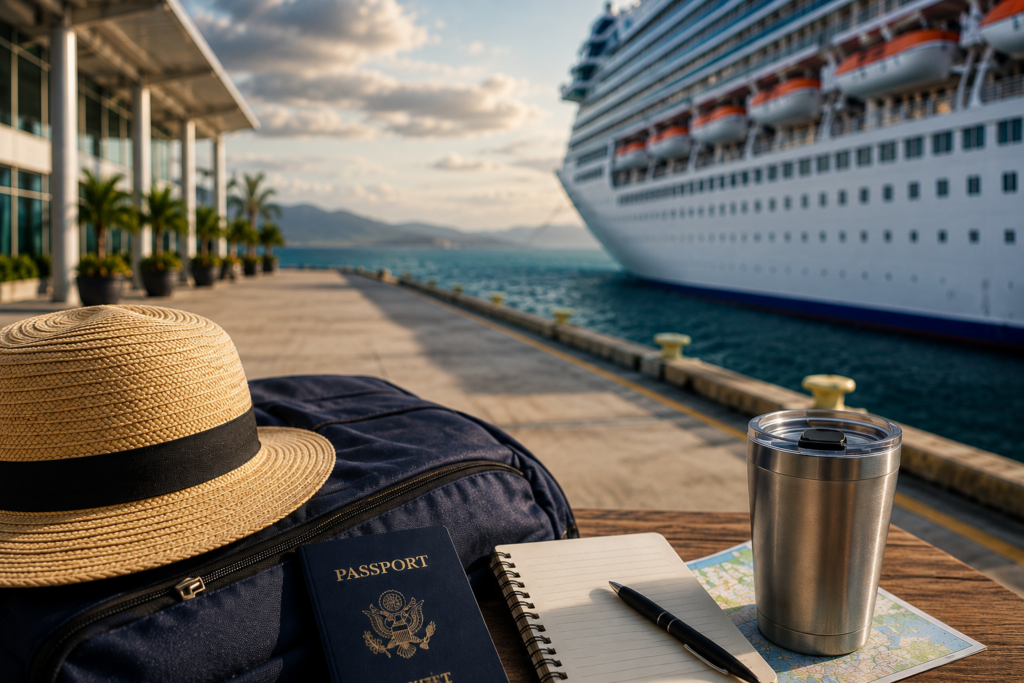
Cruise Travel Hacks
Small practical cruise tips that can help you save money,
avoid stress, and feel more prepared before you sail.
Many of the most useful cruise tips are not dramatic. They are the small lessons people usually learn after their first sailing, often after overpacking, overspending, or making embarkation day harder than it needed to be.
This guide focuses on practical habits that can reduce stress, set more realistic expectations, and help you enjoy your cruise more comfortably. None of them are complicated, but together they can make a first cruise feel much easier.
Arrive One Day Early If You Are Flying
If you need to fly to your departure port, arriving the day before is one of the simplest ways to lower your stress level. Flight delays, weather problems, missed connections, and baggage issues can all turn into a much bigger problem when a ship is leaving without you.
Missing a cruise is not just disappointing. It can also be expensive and difficult to fix on short notice. For many first-time cruisers, one hotel night near the port is worth the peace of mind.
If you are still planning the basics, the First Cruise Tips page and Embarkation Guide can help you think through timing, check-in, and boarding day logistics.
You Do Not Need the Biggest Ship for Your Cruise
It is easy to assume the newest and biggest ship is automatically the best choice. Sometimes it is. But for some travelers, a very large ship can feel a little overwhelming at first, especially when you are still learning how cruise dining, activities, and embarkation routines work.
Many mid-size or slightly older ships still offer a very enjoyable first cruise experience. They can feel easier to navigate, a little less hectic, and more approachable for travelers who want a calmer introduction to cruising. Starting with a smaller or mid-size ship can also make future cruises more exciting, since you still have newer and larger ships to experience later on.
This is not a reason to avoid large ships. It is just a reminder that bigger is not always better for every traveler. If you want help comparing different styles of ships and cruise lines, start with Cruise Line Comparisons.
Watch Real Excursion Videos Before You Book
Excursion photos and descriptions can sometimes look better than the real experience. Marketing materials may not show the bus ride, the group’s pace, the crowds, or how much free time you actually get during the day.
Before booking, it helps to watch a few traveler videos or YouTube walkthroughs for the exact port or excursion type you are considering. You can also review our Excursions Guide to better understand the differences between cruise line excursions and exploring on your own. This can give you a more realistic sense of what the day looks like and whether it fits your energy level, budget, and expectations.
Excursions can vary a lot by cruise line, port, and local operator, so a little extra research often helps travelers avoid disappointment.
Buy Drink Packages and Excursions Before the Cruise
If you think you may want a drink package, internet package, or ship-sponsored excursion, it is usually worth checking prices before embarkation day. Cruise lines often run pre-cruise promotions, and prices are frequently lower before you board.
Buying ahead of time can also make budgeting easier since you already know more of your total trip cost before sailing. It also saves onboard time, since you can spend more time exploring the ship and enjoying your vacation instead of researching excursions, packages, and reservations after embarkation.
If you want to compare excursions before your cruise, you can also browse port activities and shore tours in advance through our recommended excursion partner. The Cruise Costs Guide can also help you plan for the extra costs that sometimes surprise cruisers.
Wait Until the Last Day to Buy Some Merchandise
If you like cruise souvenirs, it can be worth browsing the shops early in the trip and then checking again near the end of the cruise. Many ships discount some shirts, logo items, and clearance merchandise during the final day or two onboard.
Selection can vary by ship, and the most popular items sometimes sell out earlier in the cruise. Still, if you are flexible about designs or colors, waiting until the last day can occasionally save money on souvenirs and gifts.
Bring Some Cash for Port Days
You do not need to carry a large amount of cash onboard, but having some small bills for port days can be very useful. Many local vendors prefer cash, and in some places smaller shops negotiate more easily when you are paying in cash instead of a card.
Using cash for smaller purchases can also help you avoid some foreign transaction fees, card-processing issues, or unfavorable conversion rates in certain ports. For many travelers, it is simply easier to use cash for tips, quick snacks, taxis, souvenirs, and other small port-day expenses. Planning for these expenses ahead of time can also help you avoid budget surprises during your trip.
This is less about avoiding credit cards entirely and more about being prepared for the way many ports and local businesses still operate. For larger purchases, a credit card is usually the safer option.
Compact Binoculars Can Be More Useful Than You Expect
Compact binoculars are one of those items many people do not think about until after their first cruise. They can be surprisingly useful for scenic cruising, spotting wildlife, viewing ports as the ship arrives, or just getting more out of a balcony cabin.
You do not need anything large or expensive. A small pair that fits easily in a day bag is usually enough for most cruisers.
Magnetic Hooks Help With Cabin Storage
Many cruise cabin walls and ceilings are metal, which makes magnetic hooks a simple way to create a little extra storage space. . They can help with hats, lanyards, light jackets, wet swimwear, or small bags without taking up drawer space. If you’re trying to make the most of a smaller cabin, our Cabin Guide covers additional storage and organization tips.
Door Magnets Make Cabins Easier to Find
Long cruise hallways can look very similar, especially on the first few days. A simple cabin door magnet can make your room easier to spot without doing anything flashy or overcomplicated. A simple cabin door magnet can make your room easier to spot without doing anything flashy or overcomplicated. This can be especially helpful on larger ships where multiple cabin hallways can look nearly identical.
Pack Lighter Than You Think
Many cruisers pack far more than they actually use. Cruise cabins are usually smaller than people expect, but they often have more storage than many travelers realize, including drawers, closets, shelves, and space under the bed for luggage.
Outside of formal dining or a few evening venues, many ships are more casual than people expect. That means you often do not need as many outfit changes as you might imagine before the trip.
If you want a more detailed packing breakdown, the Packing Guide and Cabin Guide can help you plan around cabin space and realistic onboard needs.
Keep Important Items in Your Carry-On
Your checked luggage may not arrive at your cabin immediately after embarkation. That is normal, but it can still be inconvenient if your important items are packed in the wrong bag.
Keep medications, travel documents, chargers, valuables, sunscreen, and anything you may need during the first several hours in your carry-on. It is also smart to keep passports, boarding documents, and other essentials easy to access during embarkation and port arrival.
For more boarding-day guidance, see the Embarkation Guide and the Packing Guide.

Need Help Choosing the Right Cruise?
If you still have questions about cruise lines, cabins, itineraries, or budgeting, you can get beginner-friendly planning help through our trusted travel partner.